⚠ Sponsored Content — Presented by Magic Brush Official
Dog Behaviour
We Walked Our Dogs More. Nothing Changed. Then We Tried This.
Hundreds of dog owners were doing everything right — more exercise, better food, consistent training. Their dogs were still hyperactive. The problem wasn't what they were doing. It was what they were missing.
The pattern is almost universal. Dog owner notices their dog is hyper and unsettled. They increase exercise. The dog burns off the walk within an hour. The chaos resumes. They try training. It helps somewhat. But the dog never really switches off the way they hope.
What most owners don't know — and what behaviourists have understood for years — is that the energy they're trying to burn isn't just physical. It's cognitive. And physical exercise does very little to address it.
Here are the five things that finally made sense to thousands of dog owners who found a different solution.
5
Things dog owners wish they'd known sooner
about energy, stimulation, and mealtime
01
Your dog isn't hyper. Their brain is empty.
Hyperactivity in dogs is almost always a symptom of cognitive under-stimulation, not excess physical energy. Dogs evolved to forage, track, problem-solve, and work. When none of those needs are met, the brain self-stimulates — producing the frantic, unsettled behaviour that owners mistakenly try to walk out of their dogs. The walk burns the body. The brain is still running full speed.
02
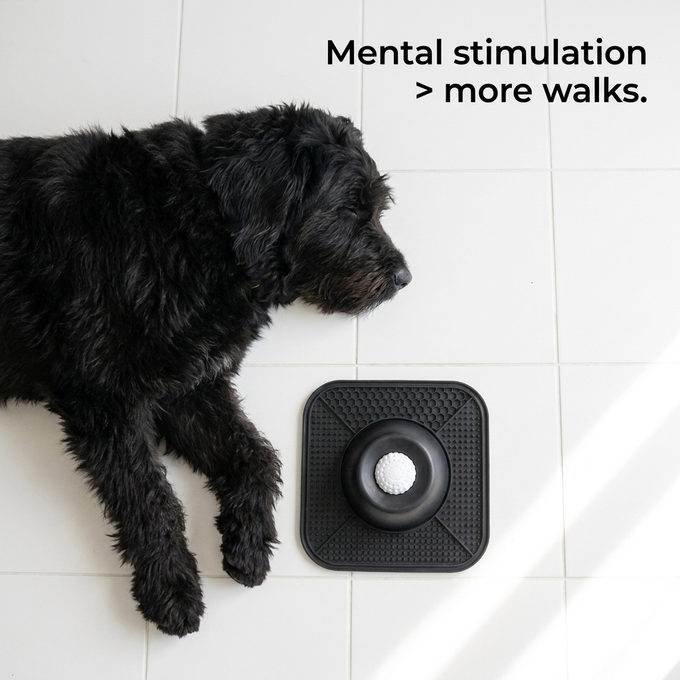
30 minutes of mental effort can outperform a 1-hour walk.
Canine behaviour research has consistently shown that cognitive challenges — foraging tasks, puzzle feeders, slow eating — produce a deeper, more lasting calm than physical exercise alone. Mental effort tires the brain in a way that physical effort can't replicate. A dog whose brain has worked is a dog that actually rests.
03
Mealtime is the most wasted opportunity in a dog's day.
The average dog finishes their meal in under 30 seconds. That's 30 seconds of no engagement whatsoever, twice a day, 365 days a year. Converting those two daily meals into genuine cognitive engagement sessions — using a bowl that requires slow, deliberate interaction — is one of the most impactful changes an owner can make without any additional time investment. The meal already happens. Make the engagement automatic.
04
Slow feeding releases the exact chemicals that calm dogs down.
When dogs engage in slow, licking, foraging-type behaviour around food and water, their brains release serotonin and dopamine — the neurochemicals responsible for calm, satisfied behaviour. A well-designed bowl triggers this response automatically, every single meal, without any intervention required from the owner.
05
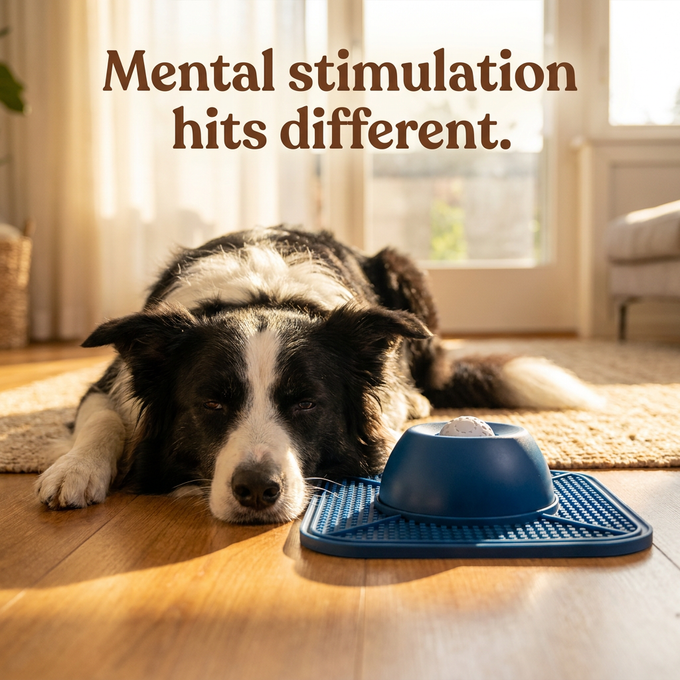
The Magic Brush Bowl does all of this — and keeps your floor dry.
The floating inner disk keeps water below splash level so your floors stay completely dry — no puddles, no water damage, no barefoot midnight surprises. But the real function is behavioural. The design forces your dog to drink slowly and deliberately, engaging their brain at every mealtime. Over 100,000 Australian dog owners have switched. The most common feedback? "My dog is just calmer now."
The bowl is available in Black or Blue, with a standard base or a Non-Slip silicone mat for dogs who push or slide their bowl. It's dishwasher safe, made from food-grade materials, and comes with a 30-day money-back guarantee.
If you're still trying to walk the hyperactivity out of your dog — stop. Start here instead.
Start at mealtime. See the difference.
From $29.95 AUD · 30-day money-back guarantee · Ships in 24hrs